
Avatar: Seven Havens opens with a provocation: the new Avatar lives in a world that blames the last Avatar for breaking it. Roughly 225 years after The Legend of Korra, official history remembers Korra not as a hero but as the Avatar who caused the Cataclysm — the event that shattered civilization into the Seven Havens. The trailer’s own description says the title “marks her as humanity’s destroyer, not its savior.” It’s no wonder the Korra legacy debate has consumed the fandom, or that Korra’s voice actress Janet Varney has said she sobbed watching the premiere.
So let’s ask the uncomfortable question straight: is Korra actually a bad Avatar? Here’s the evidence — for the prosecution, for the defense, and the verdict the show itself seems to be building toward.
AI-generated illustration; unofficial artwork.
The case against Korra: what Seven Havens shows us
The prosecution’s case is the world of the show itself. In the premiere, a festival acts out Korra’s supposed role in the world’s destruction. Street performances mock her death. Being the next Avatar is so dangerous that Pavi and Nisha — twin sisters who are somehow both the Avatar, a franchise first — have to hide what they are. Fear of the Avatar is the founding logic of this era, and Korra is its origin story.
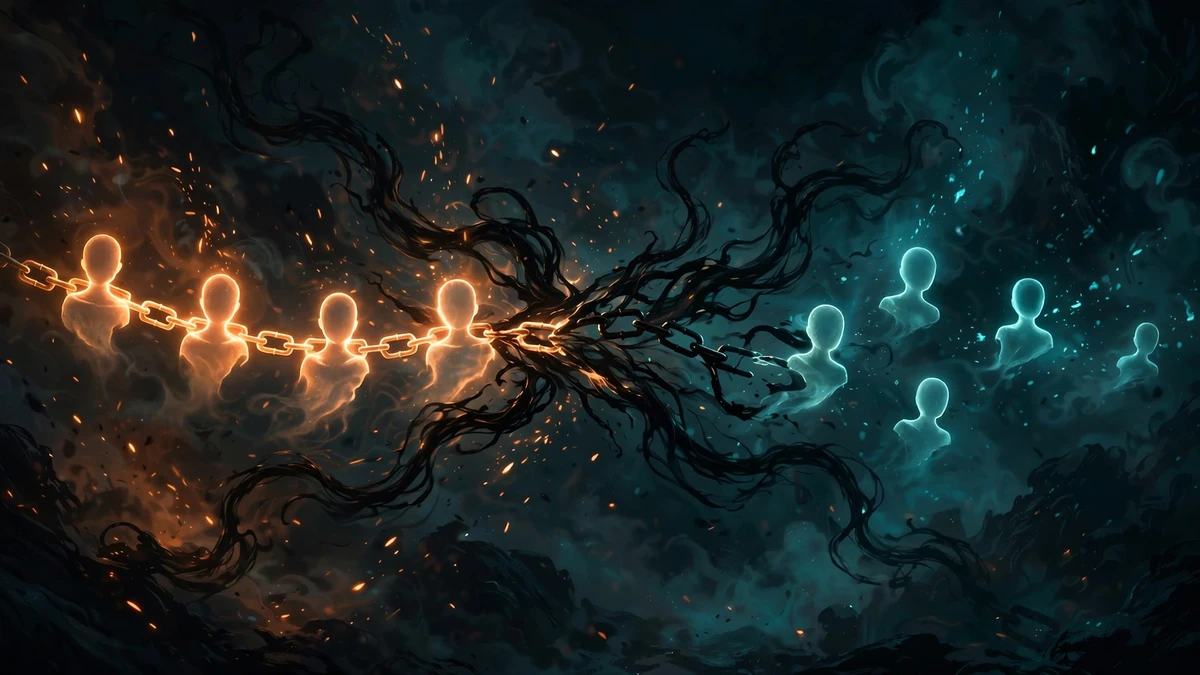
And there is one charge no defense can dismiss: the severed past lives. In The Legend of Korra Book Two, Korra’s battle with her uncle Unalaq and the dark spirit Vaatu ended with Raava herself torn out of her — and every past Avatar, all the way back to Wan, winking out one by one. As Collider put it, that loss doesn’t just shadow the rest of Korra’s life; it shadows every Avatar who follows her. Pavi and Nisha can never speak to Aang, Kyoshi, or Roku. Ten thousand years of guidance, gone in one battle. If you judge an Avatar by what she preserves for her successors, this is a genuine, permanent failure.
AI-generated illustration; unofficial artwork.
The defense: what Korra actually did
Now the rest of the record — the part the festival leaves out:
- She defeated Amon, who was stripping benders of their bending and building a revolution on legitimate grievances she actually heard.
- She defeated Vaatu at Harmonic Convergence — at the cost of her past lives, yes, but the alternative was ten thousand years of darkness. She paid the price the job demanded.
- She survived Zaheer and the Red Lotus, enduring assassination, mercury poisoning, and years of trauma and recovery — then came back.
- She talked down Kuvira rather than killing her, and saved Republic City from a spirit-energy weapon by bending its blast into a new spirit portal.
- She left the spirit portals open, reuniting the physical and spirit worlds — the single most consequential act of any Avatar since Wan.
That’s not the record of a bad Avatar. It’s the record of an Avatar who kept paying personally for victories the world needed. Flawed? Constantly. Hot-headed, impulsive, often wrong before she was right? Absolutely. But the job description was never perfection.
Why Seven Havens needs Korra to be the villain
Here’s the thing the show is quietly telling us: the Korra we see in Seven Havens is not Korra. It’s the memory of Korra — filtered through 225 years, a cataclysm, and a society that needed someone to blame. The details of the Cataclysm are hazy by design; what we get is the festival’s version, the official version, the version that keeps people afraid of the Avatar. The picture of Korra in the first episode is how the characters in the new story remember her — which is not the same as what happened.
That’s a deliberate narrative engine, not an accident. A world that worships its Avatar has no story; a world that fears her does. And the show keeps dropping hints that vindication is coming: the original trailer teased what looks like a flashback to Korra in the Avatar State, suggesting a future episode will show the Cataclysm from her perspective — the way Aang’s flashbacks reframed history in Korra itself. ScreenRant’s breakdown of what the show has revealed so far lands in the same place: what we’ve seen isn’t flattering, but it’s far from the whole story.
There’s also a pattern worth naming. Korra — brash, emotional, queer, unwilling to be the serene chosen one — has been the fandom’s punching bag since 2012 in ways Aang never was. Seven Havens literalizes that dynamic: it takes the “Korra slander” and makes it the official history of its world. The show seems to be asking whether we, the audience, are any better than the festival crowd.

AI-generated illustration; unofficial artwork.

AI-generated illustration; unofficial artwork.
The verdict: flawed Avatar, not a bad one
No — Korra is not a bad Avatar. She is the most human Avatar: the one who lost the most, paid the most, and kept going anyway. The severed past lives are a real stain on her record, and honest fans shouldn’t wave it away. But a single catastrophic cost, paid to save the world, doesn’t erase four seasons of victories that no one else could have won.
Seven Havens knows this. A show that wanted to trash Korra wouldn’t tease her return in its own trailer. The vilification is the mystery, not the conclusion — and when episodes 7–9 (“What Lies Beneath” and the two-part “The Envoys”) arrive on October 23, the truth about the Cataclysm may finally start coming out. Start with our premiere guide, then meet Pavi and Nisha — the two girls carrying the legacy Korra left behind, whether the world thanks her or not.