
Silk vs Satin and More Everyday Comparisons
Some pairs of words sound interchangeable until you try to use them — and then the difference matters. WTD, IDM and more texting meanings cause the same kind of confusion in messages, and the comparisons below cause it in shops, kitchens, bedrooms and gardens. Each answer here is short, plain and correct, so you can stop guessing and start choosing.
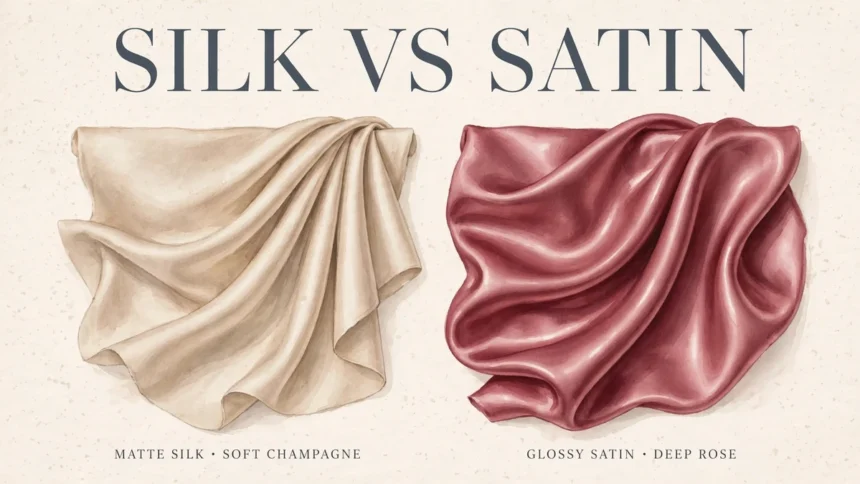
Silk vs Satin: The Fiber vs the Weave
Here is the one fact that clears up almost every silk vs satin argument: silk is a fiber, satin is a weave. Silk is a natural protein fiber produced by silkworms. Satin is a way of weaving threads — with long floats over the surface — that gives fabric its smooth, glossy face. That means the two are not alternatives to each other at all: you can buy silk satin, polyester satin, nylon satin or rayon satin, and each behaves like its fiber, not just its weave.
For sleep and skin contact, real silk usually wins on breathability and temperature regulation, because silk absorbs moisture (about 11% moisture regain) while polyester absorbs almost none and can feel clammy. For budget and easy care, polyester satin usually wins: it often survives a gentle machine wash, while silk normally needs a cold hand wash or dry cleaning, a mild detergent, and drying away from heat and sunlight. Check the label for fiber content, not just the word “satin” on the front — that label tells you what you are actually buying. A good overview of the fiber-versus-weave distinction is set out at TextileTuts’ silk vs satin guide.
Quick pick: choose silk (or silk satin) if you want breathability and are happy with gentle care; choose polyester satin if you want the shine at a lower price with a simpler wash routine.
Pt vs Qt: How Pints and Quarts Compare
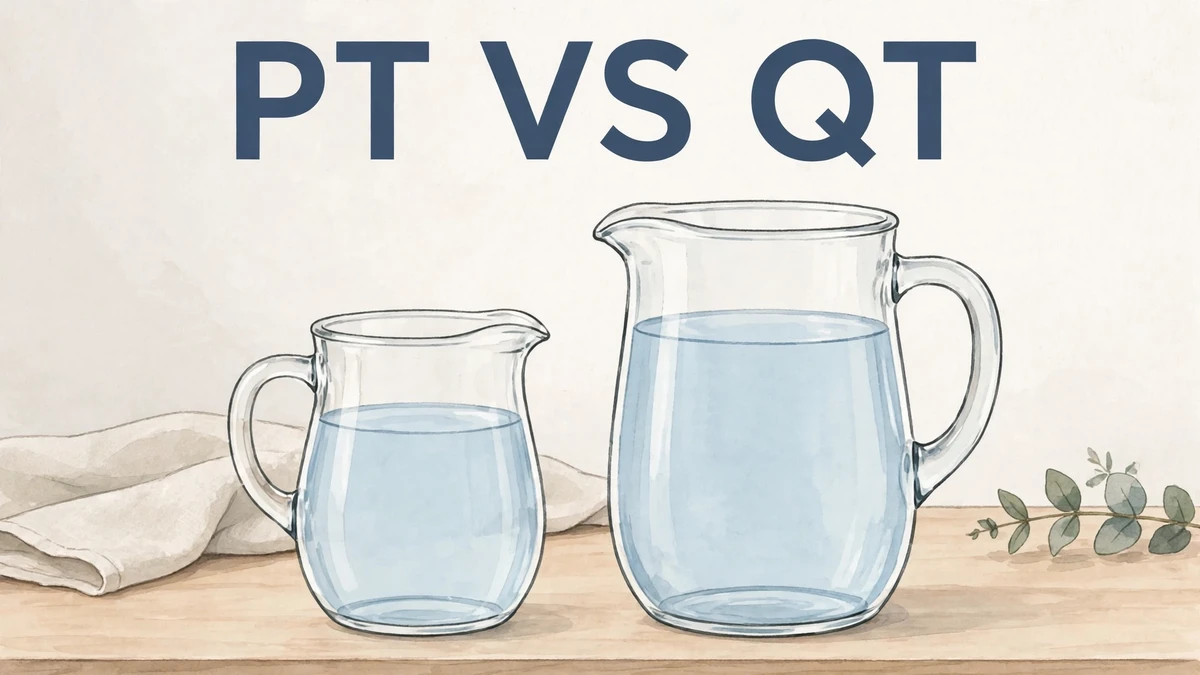
Pt means pint, qt means quart, and a quart is exactly twice a pint. In US liquid measure, 1 pint = 16 fluid ounces (2 cups) and 1 quart = 32 fluid ounces (4 cups), so 1 quart = 2 pints and 1 gallon = 4 quarts. The UK Imperial pint is larger (20 fluid ounces) and its quart is 40 fluid ounces, but the 2-to-1 relationship between pint and quart still holds. If a recipe calls for a quart and you only have a pint measure, fill it twice.
Polycrylic vs Polyurethane: Which Wood Finish?
Both are clear protective finishes for wood, but they suit different jobs. Polycrylic is water-based: it dries fast, has low odor, stays clear rather than adding warmth, and is a good choice for light woods and smaller indoor projects. Polyurethane is usually oil-based (water-based versions exist too): it is generally tougher and better for high-wear surfaces such as floors and tabletops, but it dries more slowly and can add a warm, amber tint over time. In short: polycrylic for speed and clarity, polyurethane for durability on surfaces that take a beating.
Pillow Sham vs Pillowcase: Decoration vs Everyday Use
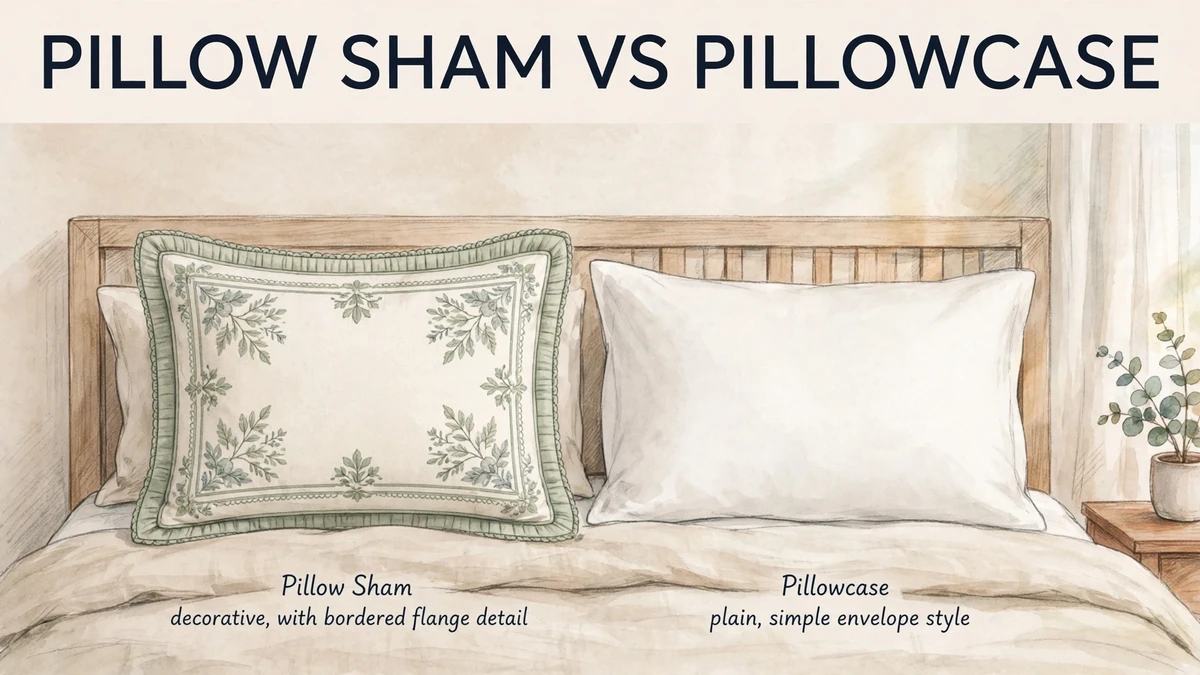
A pillowcase is the plain, functional cover you sleep on: it slips over a pillow, usually with an envelope or open end, and goes in the regular wash. A pillow sham is the decorative cover, most often seen on a made bed: it usually has a bordered flange around the edge, often closes at the back, and is there to look good rather than to be slept on every night. Many people use both — shams for the daytime look, pillowcases for sleeping — and that is exactly the distinction: one dresses the bed, the other dresses the pillow you sleep on.
Difference Between Wasp and Hornet
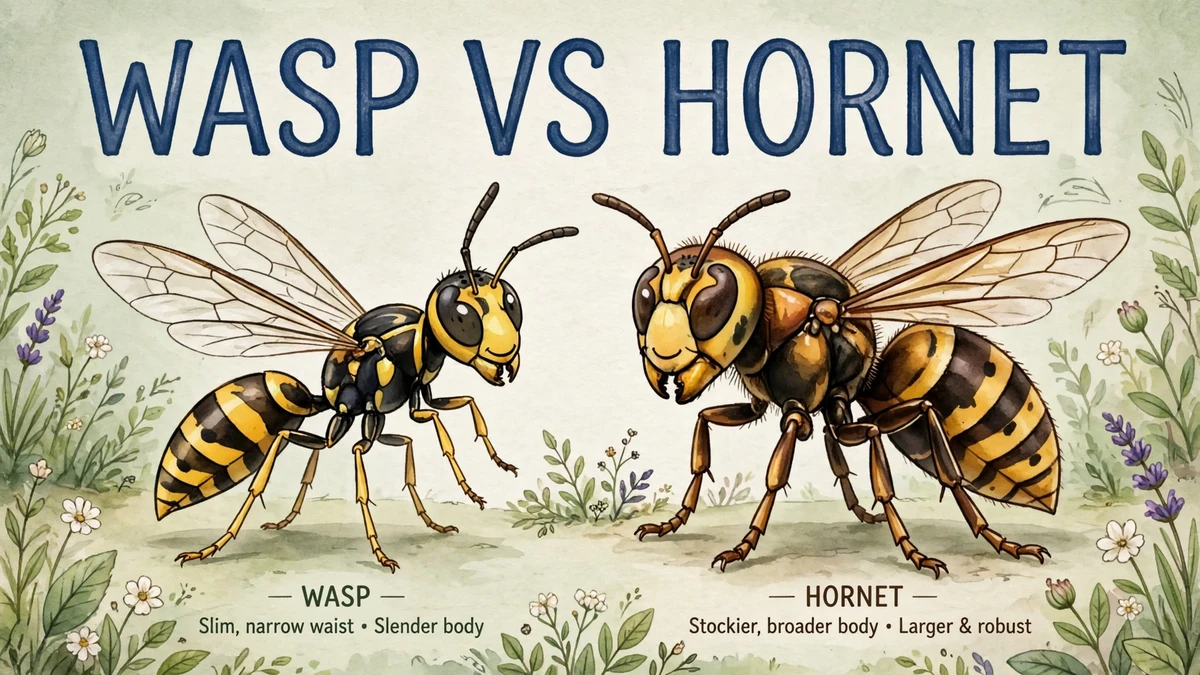
All hornets are wasps, but not all wasps are hornets. Hornets are a group of larger, stockier social wasps (in the genus Vespa). The wasps most people meet in gardens and at picnics — slim, with a narrow “thread” waist and bright yellow-and-black markings — are usually common or German wasps. Hornets are bigger and broader, and their nests are large, enclosed paper structures. Both can sting when threatened, and both are best left alone: do not approach a nest, and call a professional to remove one rather than tackling it yourself.
Cavity vs Stain: A Hole or Just a Mark?
A cavity is tooth decay: bacteria and acids have damaged the tooth surface and created a hole, and it needs a dentist to treat it — it will not heal on its own. A stain is discoloration on the tooth surface, often from coffee, tea, red wine or smoking: it is usually cosmetic, and polishing or whitening may improve it. The distinction matters because a stain is not automatically a cavity, but pain, sensitivity or a visible hole is a reason to see a dentist promptly. This is general information, not dental advice.
Ointment vs Cream: Greasy or Light?
The difference is mostly about oil and water. An ointment is oil-based, greasy and occlusive: it sits on the skin, seals in moisture and suits very dry, cracked patches. A cream is part water and part oil, lighter and faster to absorb, and suits larger areas and everyday use. If a product feels heavy and shiny, it is probably an ointment; if it rubs in quickly and feels light, it is probably a cream. This is general information, not medical advice — follow the product label and a clinician’s advice for any skin condition.
Is Bourbon and Whiskey the Same Thing?
No — but they overlap. All bourbon is whiskey, but not all whiskey is bourbon. Whiskey is the broad family: a spirit distilled from fermented grain and aged in oak. Bourbon is a specific American type with strict rules: it must be made in the United States, its grain recipe must be at least 51% corn, it must be aged in new charred oak containers, and nothing may be added except water to adjust proof. That corn and new-oak combination is why bourbon typically tastes sweeter, with vanilla, caramel and oak notes. A helpful breakdown of the rules is at A Couple Cooks’ bourbon vs whiskey guide.
Quick Answers, All in One Place
Silk is a fiber, satin is a weave. A quart is two pints. A pillow sham decorates, a pillowcase is for sleeping. Hornets are large wasps. A cavity is decay, a stain is a mark. Ointment is greasy, cream is light. Bourbon is whiskey with extra rules. Keep this page bookmarked the next time two lookalike words trip you up — and if confusing word pairs are your thing, our guides to WYFF and tweaking and DTM, STSU and JSP sort out the texting versions, while our Black fantasy books and Black women writers guides are good places to see careful word choices in action.