
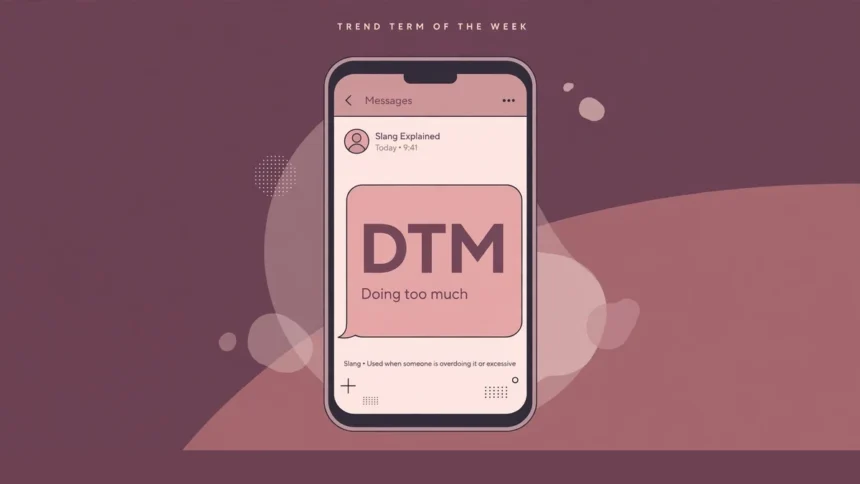
DTM, STSU, JSP and More Abbreviations Explained
DTM usually means “doing too much” — but usually is doing a lot of work in that sentence, because DTM, STSU and JSP all change meaning with context, and two of the terms in this guide have no single settled definition at all. This guide covers DTM, STSU, JSP, MBB, YFM, MYF, WB, LYK, GFI and GM, leading with the most common reading, flagging the disputed ones honestly, and giving the context cue that settles each one. Slang, like a long-running show, stays relevant by being reused and reinterpreted — the same staying power our guide to why Avatar: The Last Airbender is still relevant traces across two decades of rewatches.
How to use this guide: settled terms get a straight definition. Disputed terms get every live reading and the cue that picks between them. Nothing here is presented as a dictionary ruling — slang shifts fast, and these are the readings the slang guides checked today agree on most.
AI-generated illustration; unofficial artwork.
What Is DTM? Doing Too Much
DTM most commonly means “doing too much.” It describes someone being extra, over-the-top, dramatic, or putting far more effort into a situation than it calls for. As Mental Floss’s explainer puts it, DTM is the digital equivalent of telling someone to relax or calm down: “You wrote a ten-paragraph text explaining why you were five minutes late. That’s DTM.”
The alternates are context-dependent: “down to meet” (open to hanging out), “don’t touch me” (usually sarcastic or annoyed), and “dead to me” (a declaration, not a joke). Reading excess and subtext is a skill, on screen as in text — Jordan Peele’s films reward exactly that kind of attention, noticing when a character’s performance is doing too much and asking what it is covering. How to tell: a comment on someone’s behaviour, outfit, or effort is “doing too much.” A question about plans is “down to meet.” How to reply: to “doing too much,” laugh it off or dial it back; it is playful among friends and pointed from strangers, so weigh who sent it.
STSU Meaning in Text: Shut the Sh*t Up (Censored)
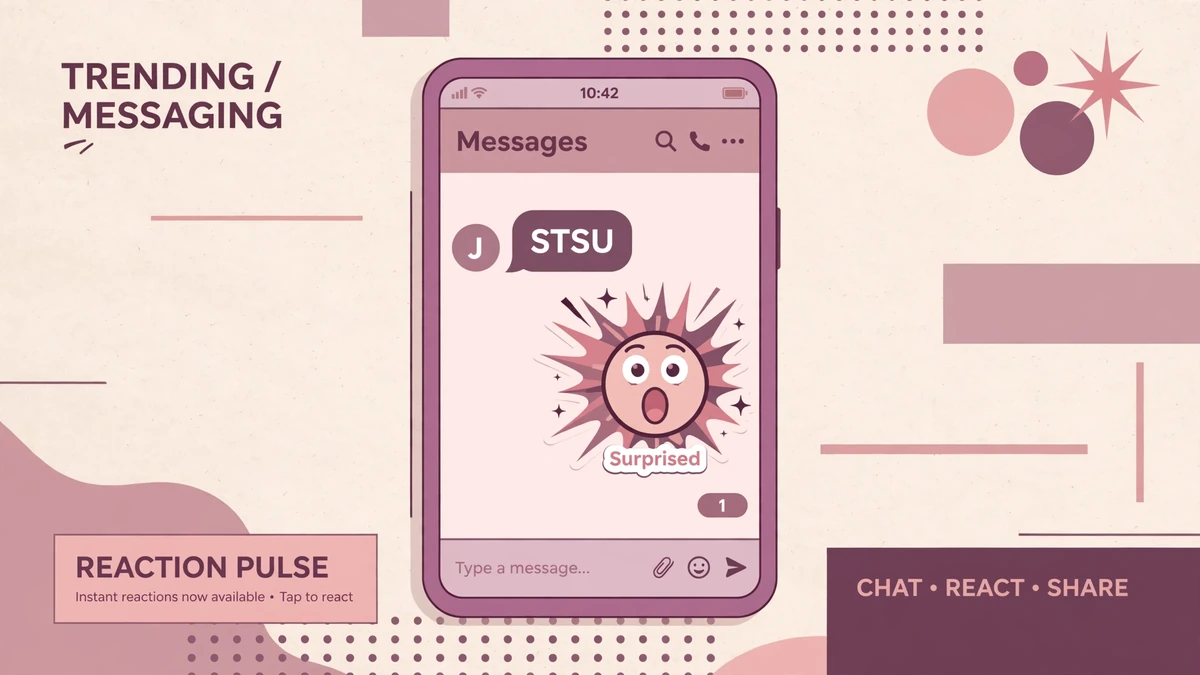
STSU most commonly means “shut the sh*t up” — printed censored here, as the full expansion is profane. It is a softer, more playful cousin of a ruder abbreviation: a shocked or disbelieving reaction. “You met her?? STSU.” From a stranger, or in an argument, the same letters can read as genuinely rude, so the relationship matters as much as the words.
The alternates are minority readings: “stay true, stay you” (encouraging), and “speak to you soon” (reported by only one guide — treat it as a minority reading). How to reply: to the primary reading, confirm the surprising news. Never put the full expansion in a formal message, and never use STSU with someone who does not already joke with you that way.
AI-generated illustration; unofficial artwork.
JSP Meaning in Text: Disputed — Do Not Collapse It Into JS
JSP is unsettled. The competing English readings are “just playing” (joking or teasing), “just saying” (an opinion, stated firmly), and “just saying please.” Do not collapse JSP into JS (“just saying”): the guides treat them as overlapping but distinct, and the “just playing” reading changes the tone completely. “I’m JSP, relax” is a joke retraction; “JSP, that was out of line” is an opinion. In French texting, JSP also means je ne sais pas (“I don’t know”) — a different language, noted here only so the two are not mixed. The technical JSP (JavaServer Pages) is out of scope for a texting guide. How to tell: a laugh or a tease nearby points to “just playing”; a firm opinion points to “just saying.”
MBB Meaning: Disputed — Lead With the Apology Reading
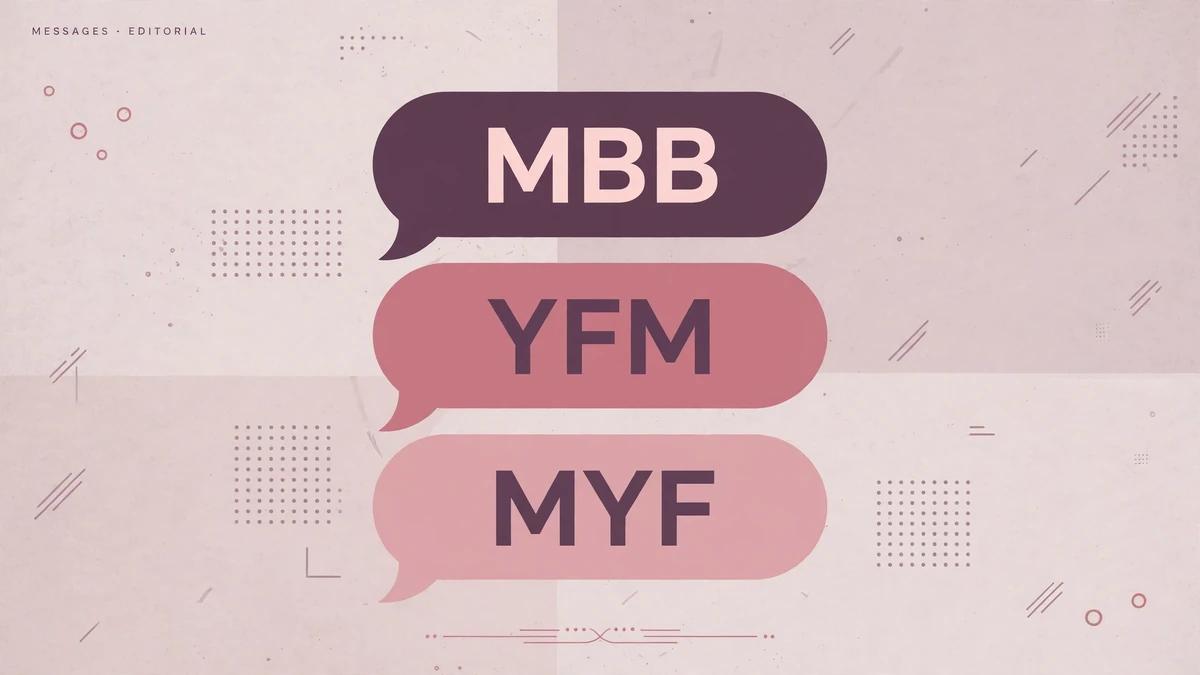
MBB has no consensus meaning. The most frequent casual-texting reading across the guides checked is “My Bad, Bro” or “My Bad, Babe/Baby” — a light apology for a minor mistake. Other readings in circulation include “My Bad, Bye,” “My Baby Boy/Boo” (affectionate), “Might Be Biased,” and “Meet Back By.” The sources here are thin, SEO-style guides, and this article says so rather than dressing one reading up as certain. How to tell: apology context — a small mistake just happened — is the cue for the lead reading. How to reply: accept the apology and move on, unless the affectionate reading is obvious from the relationship.
What Do YFM Mean in Text? You Feel Me?
YFM means “You feel me?” — do you get me, do you understand? It is a friendly check-in that seeks agreement: “That meeting could’ve been an email, YFM?” How to reply: confirm or disagree plainly. YFM asks for a response, not just a reaction. Writers who named what an apology and an acknowledgement have to do — and what they cost when they are withheld — fill our Black feminist books reading list, and “you feel me” is the group-chat version of the same demand: be understood, not just heard.
AI-generated illustration; unofficial artwork.
What Does MYF Mean in Texting? Three Readings, No Winner
MYF is unsettled, with three readings and no single winner: “Miss Your Face” (I miss you), “My Fault” (an apology), and “My Friend” (a form of address). Presenting any one of these as “the” meaning would be inventing certainty the sources do not support. “Haven’t seen you in weeks, MYF” is missing someone; “MYF, I forgot” is an apology; “What’s good, MYF?” is an address. How to tell: the sentence around it. If you still cannot tell, ask — MYF is exactly the kind of abbreviation where a wrong guess changes the conversation.
What Does WB Mean in Text? Welcome Back
WB means “Welcome Back” in texting — a greeting for someone returning to a chat, a game, or a group. “Back from holiday? WB!” The other expansions of WB (Warner Bros, World Bank, and the rest) belong to other worlds and are out of scope here. How to reply: say thanks, and pick up where you left off.
LYK, GFI and GM: The Settled Three
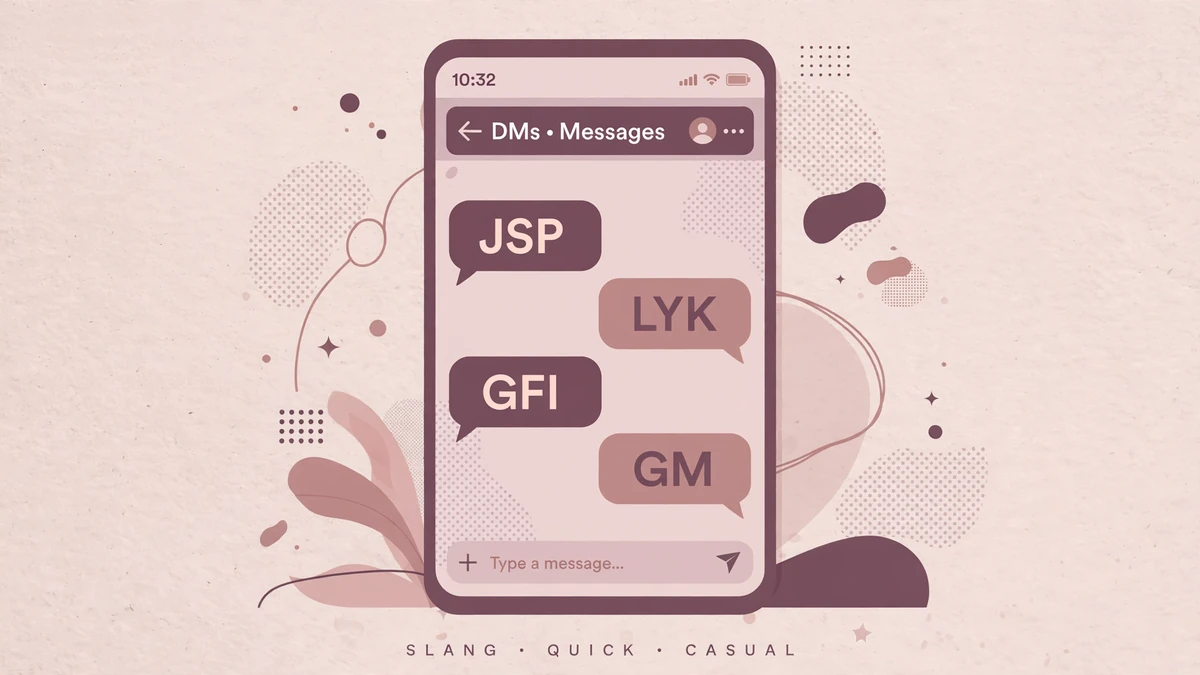
LYK means “(I’ll) let you know” — a promise of a later answer. “Can you come Saturday?” — “LYK tonight.” It buys time without saying no. GFI means “Go for it” — encouragement or permission. “Should I send it?” — “GFI.” GM means “Good morning” in texting. “GM! Coffee first, then we talk.” A minor alternate, “great move,” exists only in gaming contexts. New words get invented whenever people need them — for new mornings, new plans, new worlds — which is the same impulse Afrofuturism names in fiction: language that builds a future to live in. Wikipedia’s overview of internet slang makes the broader point: these shortcuts exist to save keystrokes and to signal belonging to a group that shares them.
AI-generated illustration; unofficial artwork.
Quick Reference: DTM, STSU, JSP, MBB, YFM, MYF, WB, LYK, GFI, GM
| Abbreviation | Most common meaning | Status |
|---|---|---|
| DTM | Doing too much | Settled, with alternates |
| STSU | Shut the sh*t up (censored) | Settled, tone-dependent |
| JSP | Just playing / Just saying | Disputed |
| MBB | My Bad, Bro/Babe | Disputed, thin sources |
| YFM | You feel me? | Settled |
| MYF | Miss Your Face / My Fault / My Friend | Disputed — context decides |
| WB | Welcome Back | Settled |
| LYK | (I’ll) let you know | Settled |
| GFI | Go for it | Settled |
| GM | Good morning | Settled |
The rule that covers all ten is the same: read the sentence, the sender, and the platform before the abbreviation. Abbreviations are shortcuts, and a shortcut only works when everyone in the chat shares the map.