
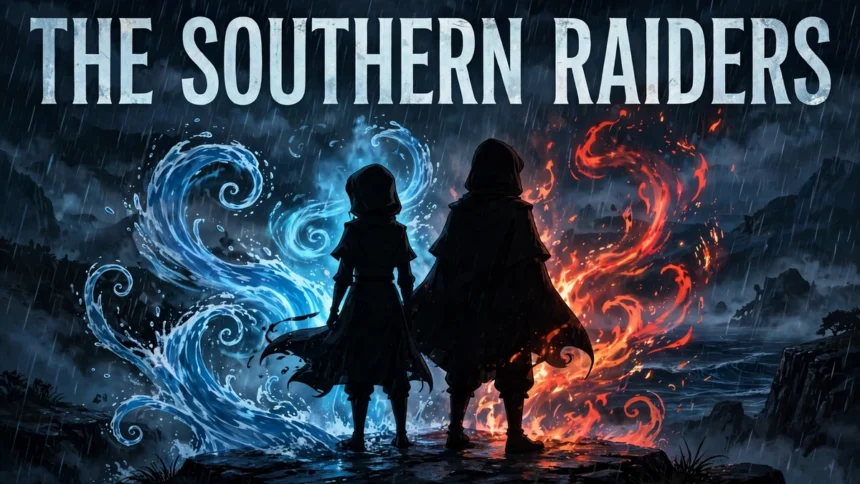
The Southern Raiders: Katara, Zuko, and the Episode That Refuses a Clean Ending
“The Southern Raiders” is the sixteenth episode of Book Three: Fire, the fifty-sixth episode of Avatar: The Last Airbender overall, and the last of Zuko’s field-trip episodes — the run of stories in which each member of the group takes the newest recruit out alone and comes back changed. It first aired on July 17, 2008, written by Elizabeth Welch Ehasz and directed by Joaquim Dos Santos. Zuko offers Katara the one thing Aang cannot: the chance to find the man who killed her mother. What follows is the darkest twenty-two minutes the show ever aired, and the episode fans still argue about most — not because it is unclear, but because it refuses to tell the audience how to feel about what Katara does. Our Katara character analysis traces the full arc this episode completes; here, the focus is on this one story, told three times, and why its ending still hurts.
How the episode starts: the only unforgiven member of the group
Azula finds the group at the Western Air Temple and attacks with a fleet of airships. Zuko holds her off, the group escapes, and everyone toasts him — everyone except Katara. She was the first person to trust him, back in Ba Sing Se, and he betrayed that trust to side with Azula. Now she tells him, in so many words, that the only ways to make it up to her are to reconquer Ba Sing Se or bring her mother back. That night Zuko asks Sokka what happened to their mother, and Sokka tells him. The Fire Nation attacked the Southern Water Tribe six years earlier, when Katara was eight and Sokka was nine. The raid was short. When it was over, their mother, Kya, was dead. Sokka remembers one detail: the lead ship flew flags bearing sea ravens. Zuko recognises the symbol at once. It belongs to the Southern Raiders, a Fire Navy unit tasked with hunting down the last waterbender of the South. He waits all night outside Katara’s tent, and in the morning he offers her the hunt.
Three versions of one murder
The episode tells the story of Kya’s death three times, and each telling adds a piece the last one withheld. Sokka’s version is a child’s memory of a battle: black snow warning of a raid, warriors fighting, a mother gone when the smoke clears. Katara’s version is narrower and more terrible: she was eight, she went looking for her mother, she found a Fire Nation soldier questioning Kya in their home, and her mother sent her away to fetch her father, promising everything would be all right. By the time Katara returned with Hakoda, the soldier was gone and Kya was dead. Yon Rha’s version, when they finally reach him, is the one that breaks the story open. A source had told him there was one waterbender in the Southern Water Tribe, and he had come to eliminate that bender. Kya, to save her daughter, lied and claimed to be the last waterbender herself. Yon Rha believed her — and instead of taking her prisoner, he killed her. Katara, standing in the rain, tells him the truth he never knew: she was the last Southern waterbender. Her gift, her identity, is what put Yon Rha’s hands around her mother’s neck. That is the episode’s cruellest insight, and it is why no version of the story, told once, would have been enough.
AI-generated illustration; unofficial artwork
Bloodbending, and the line Katara crosses
On the way to Yon Rha, Katara and Zuko infiltrate a Fire Navy coordination station, learn the Raiders are stationed at Whaletail Island, and take their ship. Under a full moon, Katara sends most of the crew overboard with a massive wave, then bloodbends the ship’s captain so Zuko can interrogate him. It is the first and only time in the series that Katara uses bloodbending willingly rather than out of necessity, and the last time she bloodbends at all. The captain is not the man who killed her mother. Yon Rha retired four years earlier. Katara does not apologise. The show holds on Zuko’s face — horror, not approval — and lets the audience sit with it. Hama, who taught Katara bloodbending in “The Puppetmaster,” told her the power exists and it is her duty to use it. “The Southern Raiders” is Katara testing that claim on an innocent man and finding out what it costs her to believe it, even for an hour. The healer of the group, the moral compass, is willing to become the thing she fears in order to get closure. The episode never suggests she was right to do it. It also never suggests the impulse was unreasonable.
Yon Rha: the monster who is just a man
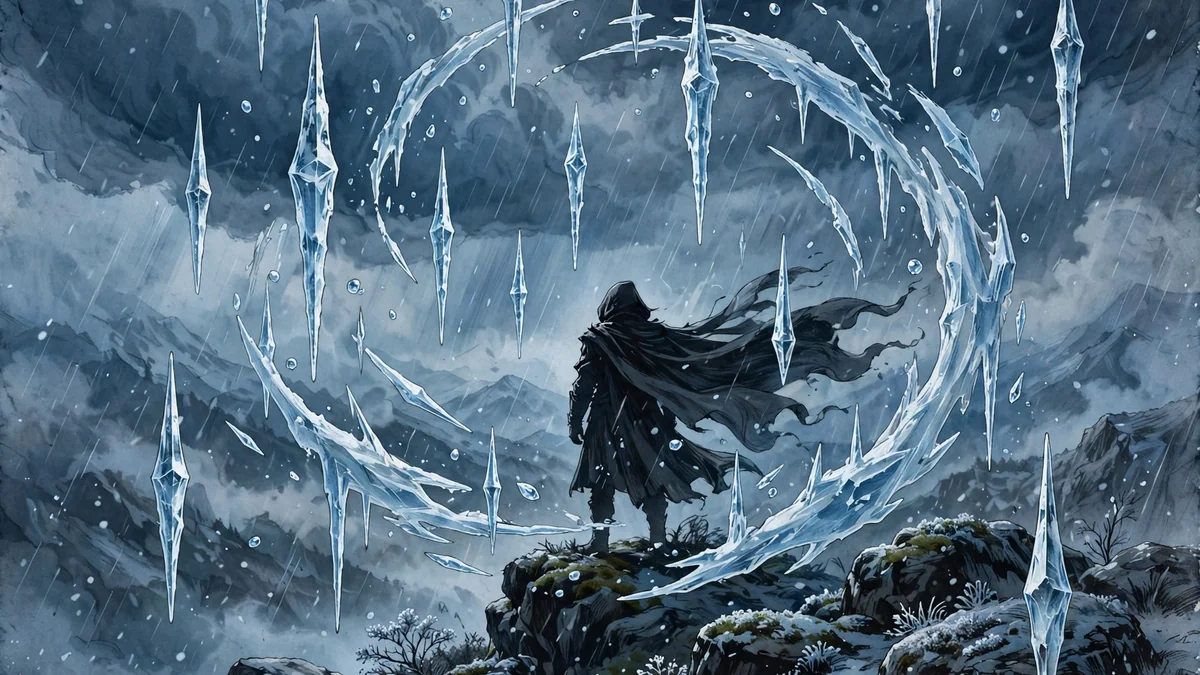
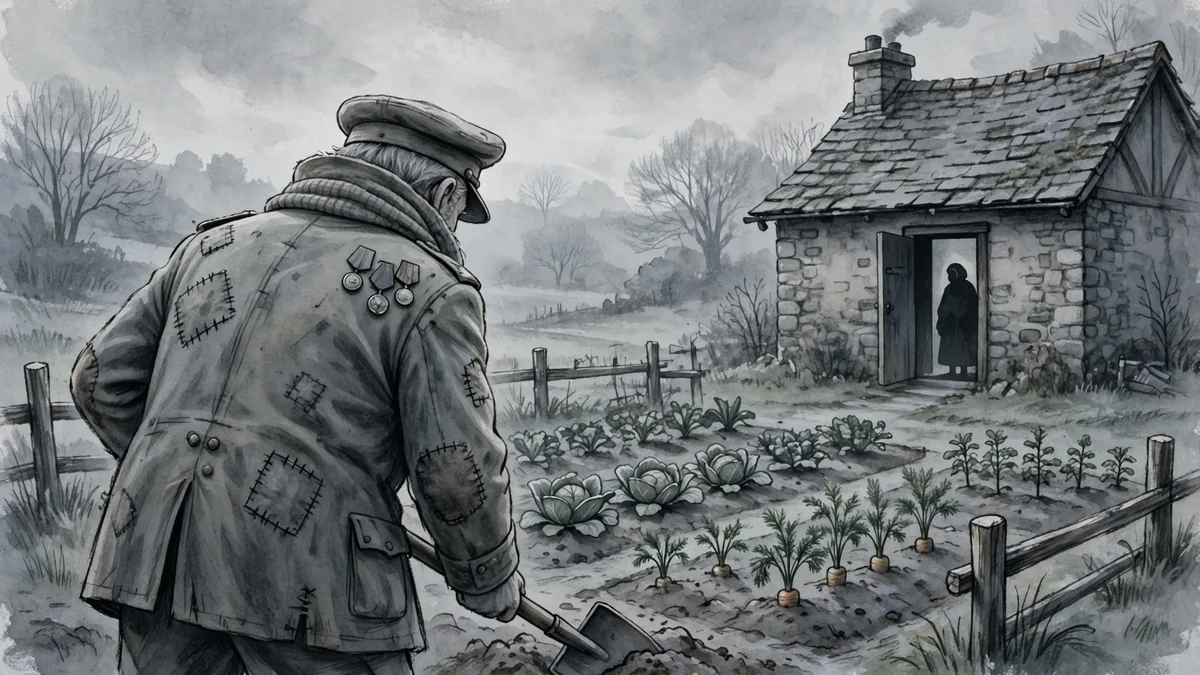
Every beat of the hunt primes the audience for a monster. Instead, Yon Rha is a retired old man living with his ill-tempered mother, sent to market for tomato carrots, digging in a garden, jumping at shadows because some part of him has always expected someone to come for him. He does not remember Kya at first. The event that defined Katara’s entire life — the reason she wears her mother’s necklace every day — was one raid among many for him. When he does remember, he remembers the taunt, the lie, and the killing, and he offers his own mother to Katara in exchange for his life. Katara raises the rain itself into a ring of icicles, stops at the last second, and delivers the episode’s most devastating verdict: she always wondered what kind of man could do such a terrible thing, and now that she sees him, she understands. He is weak, pathetic, and empty, and she cannot bring herself to kill him for revenge. She leaves him sobbing in the rain. Killing him would have given her a moment. It would not have given her mother back, and it would not have made Yon Rha matter. The show understands that revenge fails here not because Yon Rha deserves mercy, but because there is nothing in him worth destroying. He has already destroyed himself, slowly, over four years of waiting to be found.
AI-generated illustration; unofficial artwork
Aang is right, Zuko is right, and neither is enough
The episode stages a genuine moral argument and refuses to declare a winner. Aang tells Katara that revenge is never the answer, compares her to Jet, and pleads with her to let her anger out and then let it go — to forgive. He is speaking from the Air Nomad ethic that will define his own impossible choice with Ozai, and the episode honours it: Katara does let the icicles fall as water. But Zuko’s counter-argument is not dismissed either. He tells Aang that forgiveness is easy to preach from a position of distance, and he gives Katara the one thing Aang’s philosophy cannot: a road to the man himself, and the freedom to decide for herself. When Katara returns, she tells Aang the precise truth of where she landed. She will never forgive Yon Rha. She is ready to forgive Zuko. “I’ll never forgive him. But I am ready to forgive you,” she says, and they hug. Aang calls it the right choice. Zuko, still unsure, asks Aang what he is going to do when he faces Ozai — and Aang looks away. The show leaves both men with an unanswered question, because the episode’s real subject is not whether Katara should have killed Yon Rha. It is whether forgiveness and justice are the same thing, and what a person does when they are not.
Why Zutara fans claim this episode — and why it proves nothing
No episode is cited more often in the Zutara versus Kataang argument than this one, and the reasons are understandable. Katara and Zuko spend the whole story alone together, sharing the one wound nobody else in the group fully shares: both of them have been shaped, and damaged, by the Fire Nation’s cruelty from the inside and the outside at once. Zuko is the only person who does not flinch at Katara’s anger, and Katara is the only person whose forgiveness Zuko has actually had to earn. That is real intimacy, and the show plays it honestly. But the hug at the end is a hug of forgiveness, not a declaration. Katara forgives Zuko for Ba Sing Se; she does not say she loves him, and the episode gives no indication that she means more than exactly what she says. Readers who want the full, even-handed version of the ship war — the case for Zutara, the case for Kataang, and the four contested moments both sides cite — should read our Zutara vs Kataang explainer. What “The Southern Raiders” actually establishes is narrower and more durable than any ship claim: Katara and Zuko understand each other’s pain in a way Aang, for all his wisdom, does not yet. That understanding is why the episode still works as drama eighteen years later, whatever a viewer ships. It is also why it remains the hinge of Zuko’s redemption. He earns his place in the group not by defeating Azula, but by witnessing what his nation did to a family and refusing to look away from it.
AI-generated illustration; unofficial artwork
Why it still hurts
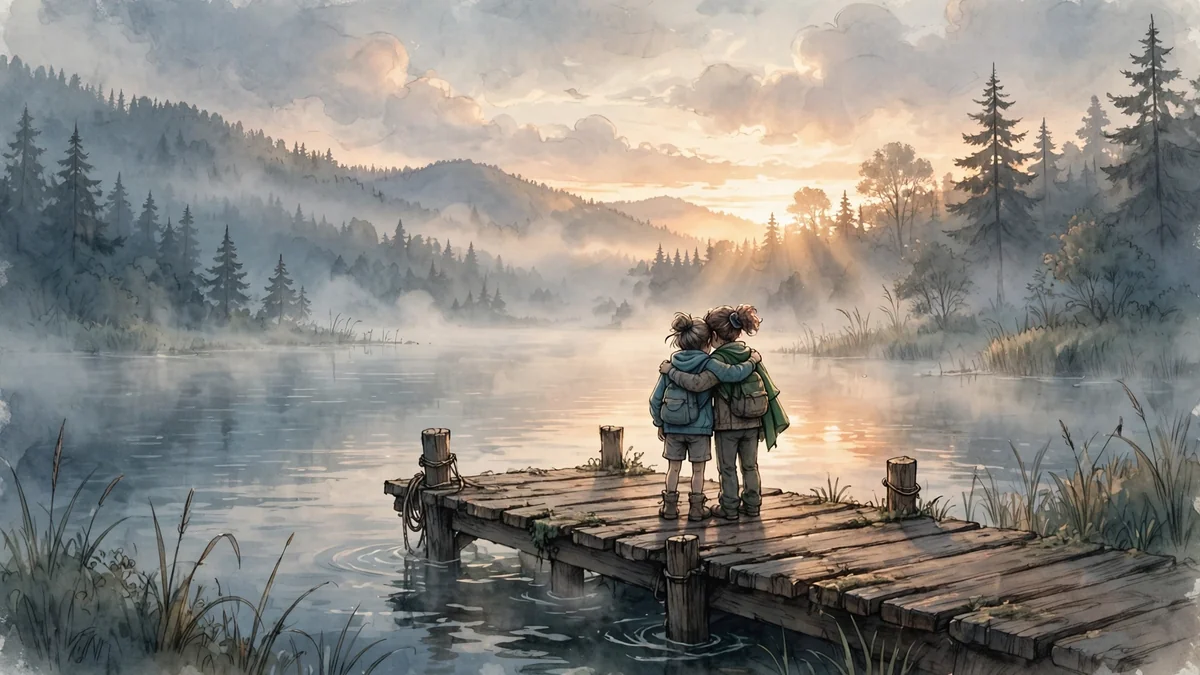
“The Southern Raiders” endures because it treats a children’s cartoon audience as capable of holding two truths at once. Katara is right to be furious, and fury nearly makes her a killer. Yon Rha is a murderer, and also a pathetic old man whose punishment — living with what he did, waiting for the knock — is already underway. Forgiveness is the right ending, and it changes nothing about what was lost. The episode’s final image is not triumph but a dock at Ember Island, a hug, and an unanswered question about Ozai hanging in the air. It is the moment the group truly becomes whole, and it costs Katara the cleanest version of her own story to get there. That is why it still tops best-episode lists, and why Avatar as a whole still holds up: it trusted its audience to sit in the rain with Katara and decide, for themselves, what strength looks like. For the wider case on the show’s staying power, see why Avatar: The Last Airbender is still relevant, and for the character study this episode answers, why Toph is the show’s best character makes the companion argument from the other side of the group.