
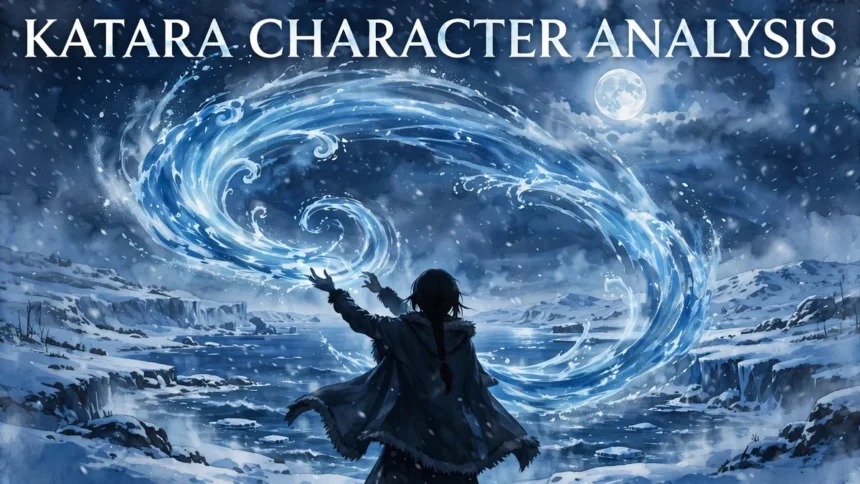
Katara opens Avatar: The Last Airbender by saying she believes Aang can save the world, and she spends the next three seasons proving why that belief matters. She is the last waterbender of the Southern Water Tribe when the series begins, a self-taught teenager carrying her people’s bending tradition almost alone. By the finale she is a master who taught the Avatar himself — and, decades later, the next Avatar too. That journey is why Avatar: The Last Airbender is still relevant as a character story, not just a fantasy epic: Katara is the show’s conscience, its healer, and, when pushed, its most frightening fighter.
This analysis follows Katara from the South Pole to the North Pole and beyond: her bending, her moral code, the revenge she refused, and the “mother figure” label she never quite accepted.
Who Katara Is
Katara is the younger sister of Sokka and the daughter of Chief Hakoda and Kya of the Southern Water Tribe. Fire Nation raids had stripped her tribe of its waterbenders, leaving her the only waterbender in the South Pole — talented, determined, and entirely untrained. When she and Sokka discover Aang frozen in an iceberg, she insists on freeing him, against her brother’s protests. That first choice sets her character: Katara acts on compassion first and worries about the consequences second, a pattern that will carry her through the whole series.
She is also, as the show’s creators have described her, the series’ deuteragonist — the second lead, not a sidekick. The story is told largely through her eyes: she narrates the opening, she holds the group together when hope runs out (most famously in the desert, when the others falter), and her growth mirrors Aang’s. Where Aang must learn to accept the weight of being the Avatar, Katara must learn what to do with power once she finally has it.
From Self-Taught to Master: The North Pole
Katara’s bending arc is the show’s most satisfying training story because it starts from nothing. With no teacher in the South Pole, she practices alone, cracking ice by accident as a child and teaching herself forms from scrolls and instinct. The journey to the Northern Water Tribe is, for her, a pilgrimage: a real master at last.
What she finds is a closed door. Northern custom forbids women from learning waterbending as a martial art — they may learn healing, not combat. Master Pakku refuses her. Katara’s answer is not to accept the rule but to outgrow it: she trains in secret, challenges Pakku to a duel, and earns his respect the hard way. The turning point is personal, not political. Pakku recognizes her necklace — the betrothal necklace he once carved for her grandmother Kanna — and relents. Katara becomes his student, masters waterbending in a remarkably short time, and is then assigned as Aang’s new waterbending teacher when the group leaves the North Pole. She went looking for a master and left as one.

Healing, and the Power She Refused to Love
Katara’s bending has two faces, and the show insists on both. She is a healer — the skill Northern custom would have limited her to — and she becomes, by reputation, one of the greatest healers alive. She is also the only known bender to master both sub-skills of her element: healing and bloodbending.
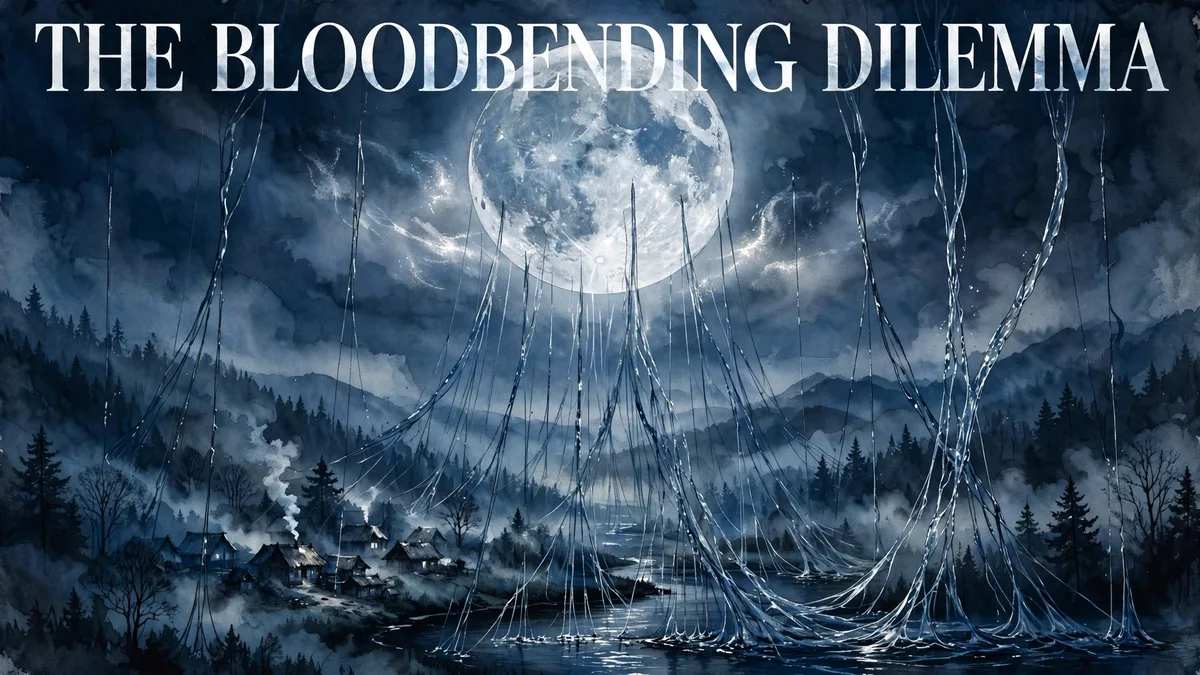
Bloodbending enters her story in “The Puppetmaster,” the third-season episode in which the group meets Hama, a Southern Water Tribe waterbender living in hiding in the Fire Nation. Hama, imprisoned by Fire Nation soldiers during the war, developed the technique in captivity, practicing on rats before using it on people to escape. She offers to teach Katara, Katara refuses — and when Hama turns the technique on Aang and Sokka, Katara bloodbends Hama to stop her. It is a victory that horrifies her. She vows never to use bloodbending again, a promise she will break exactly once, under the worst possible circumstances.
That discipline matters beyond one episode. By the era of The Legend of Korra, bloodbending is outlawed in the United Republic, and Katara’s own efforts helped bring about that ban. The show never lets her enjoy the power: bloodbending is, for Katara, a line she crossed to save her friends and then spent her life making sure nobody else would cross lightly.
The Southern Raiders: The Revenge She Refused
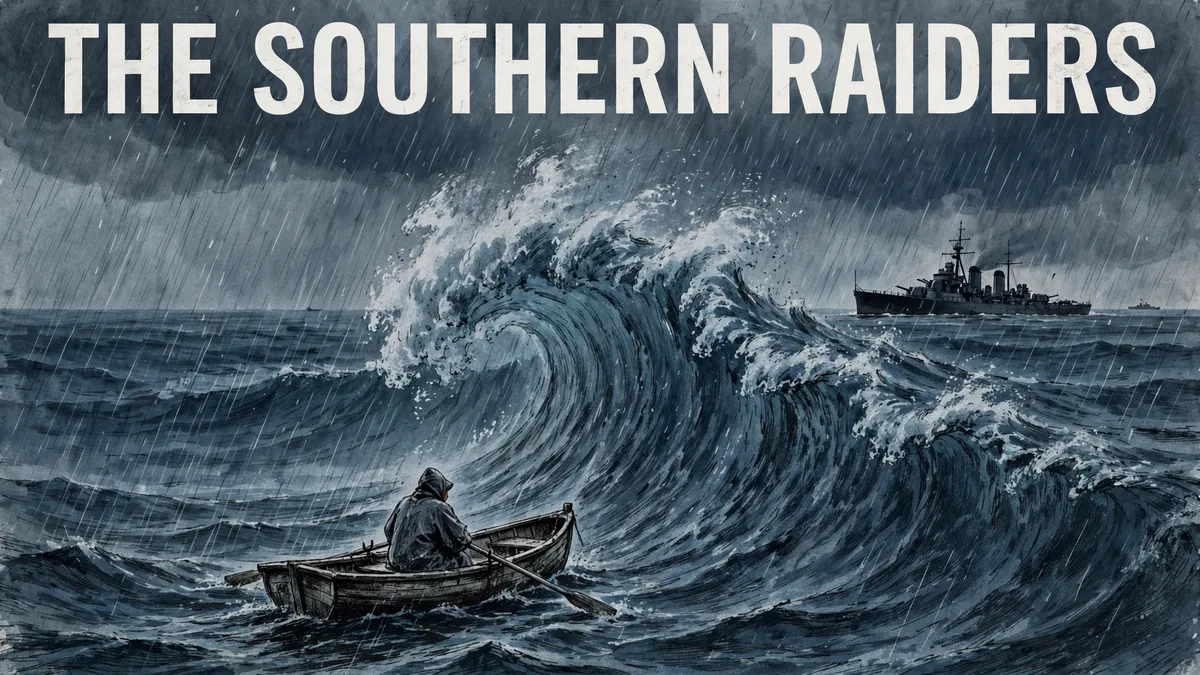
“The Southern Raiders” (Book Three, episode 16, aired July 17, 2008) is Katara’s defining episode, and the bravest thing the show ever did with her. Zuko, still earning the group’s trust, offers to help her find the Fire Nation soldier who killed her mother, Kya. The hunt takes them to a Southern Raiders ship, where Katara bloodbends the captain to interrogate him — breaking her vow, and shocking even Zuko — only to learn he is not the killer. The real commander, Yon Rha, retired years earlier and lives with his mother.
The confrontation that follows is the series at its most adult. Yon Rha, confronted, is not a monster out of legend but a pathetic, frightened old man who tries to bargain with his own mother’s life. Kya, Katara learns again in the telling, claimed to be the tribe’s last waterbender to protect her daughter — and Yon Rha killed her for it. Katara raises the rain itself into ice daggers, stops, and cannot do it. She does not forgive him. As she later puts it to Zuko: “I’ll never forgive him. But I am ready to forgive you.” The episode’s distinction is precise and worth holding onto: refusing revenge is not the same as granting forgiveness, and Katara grants neither to Yon Rha — only the decision not to become a killer herself. As The A.V. Club’s recap notes, she emerges from the darkness stronger, not softer.
The “Mother Figure” Problem
Katara is often called the mother of Team Avatar, and the label is both true and unfair. It is true that she mothers the group: she cooks, she worries, she keeps Aang and Sokka and later Toph, the show’s fiercest character, from falling apart. She stepped into that role at home after Kya’s death, holding her family together while her father was at war.
It is unfair because the show knows the role costs her something. Toph needles her for it, and Katara bristles — not because she does not care, but because being the responsible one is a burden the group keeps handing her without asking. Her compassion is not softness: it is a discipline. The same girl who bandages wounds will threaten a town’s water supply to help a polluted village (as the Painted Lady), defy a master to learn combat bending, and face down a killer. Katara’s kindness is a choice she keeps making, not a default setting — which is exactly why the moments she almost abandons it hit so hard.
Katara in The Legend of Korra
Decades later, Katara is still teaching. In The Legend of Korra, elderly Katara is Korra’s waterbending teacher, passing on the art — including healing — to a second Avatar. She married Aang, raised three children (Bumi, Kya, and Tenzin), and became the living bridge between the two series: the girl who saved the last waterbending tradition of the South Pole grew up to be the woman who kept it alive for the next generation. Mae Whitman voiced Katara in the original series; Eva Marie Saint voiced the elder Katara in the sequel.
Her legacy also runs through the show’s great romance debate. Katara and Aang’s relationship — the Kataang endgame — remains one of the fandom’s defining arguments, set against the Zutara alternative that never was, as explored in our Zutara vs Kataang ship-war explainer. That the debate still burns says something about Katara herself: she is not a prize to be won in it, but the character whose choices decide it.
Why Katara Endures
Katara endures because she is the rare hero whose power and whose conscience grow at the same speed. Every new ability comes with a moral price — healing with responsibility, bloodbending with horror, mastery with the duty to teach — and she pays each one in full. She is not the Avatar, and that is the point: she chose the work anyway, from a frozen village with no teacher to a world that needed her twice.
The Avatar story did not end with her, either. A new Avatar, Pavi, carries the cycle forward in Avatar: Seven Havens, and the questions Katara wrestled with — what power is for, who it may be used against, and what it costs to refuse it — are the same questions every Avatar inherits. Katara answered them first, and best.