
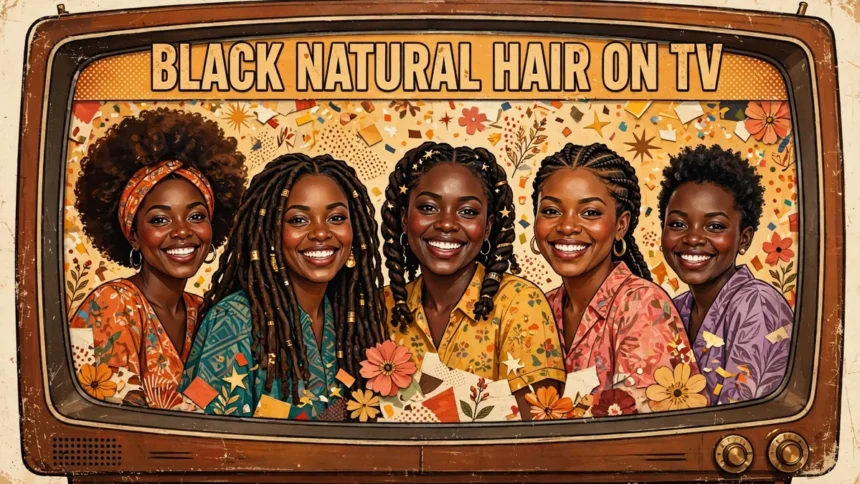
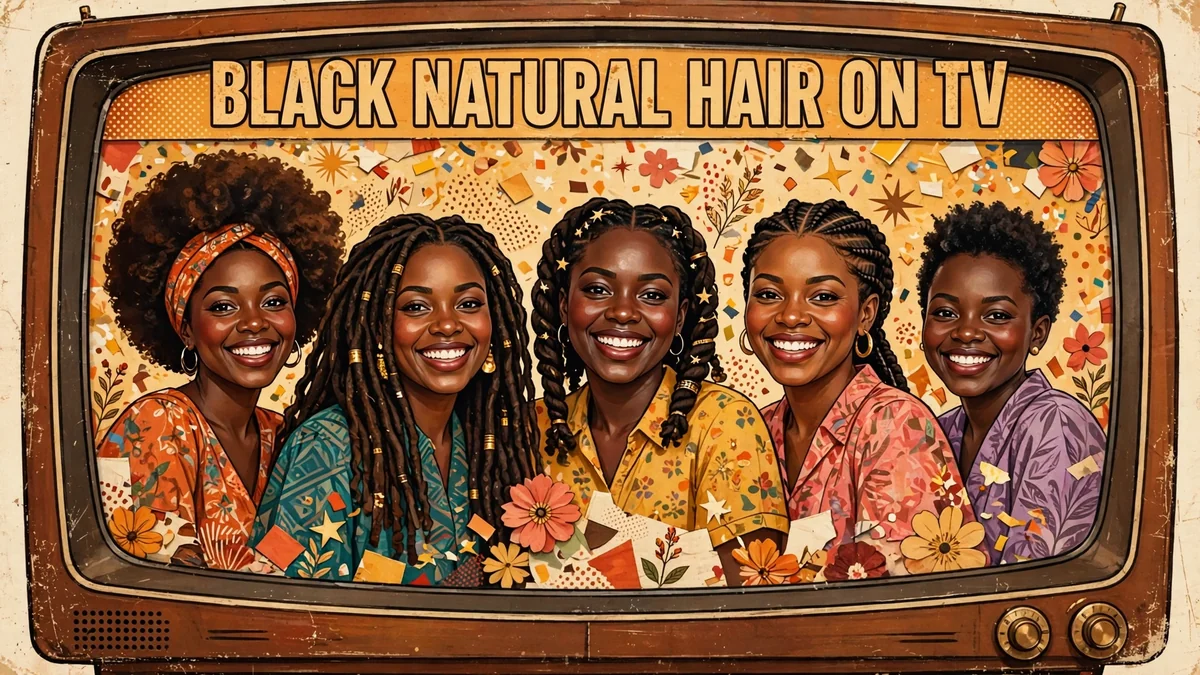
For most of television history, Black women’s hair was something TV showed only after it had been processed, pressed, or hidden under a wig. The intimate reality of natural hair — the wash days, the protective styles, the politics of wearing it to work — stayed off-screen. Then a handful of characters and moments cracked the screen open. From a wig coming off in a dark bedroom to an entire docuseries built on hair stories, here are the TV characters and moments that changed Black natural hair representation — and why they mattered far beyond the screen.
The stakes were never just aesthetic. Hair has always been where beauty standards do their gatekeeping, which is why colorism in Hollywood casting and hair politics are the same fight. These are the moments that fought it on television.
AI-generated illustration.
Annalise Keating takes off her wig (How to Get Away with Murder, 2014)
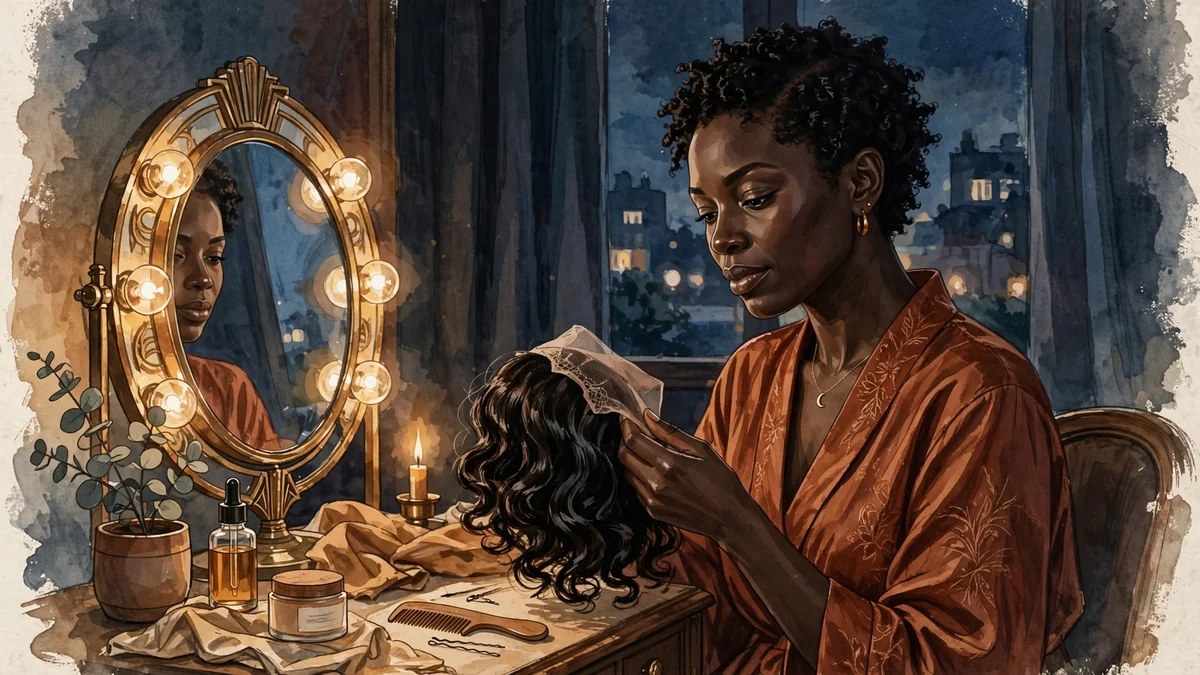
The single most important hair moment in TV history belongs to Annalise Keating. In the season 1 episode “Let’s Get to Scooping,” Viola Davis’s powerhouse attorney comes home shattered, sits before her bedroom mirror, and wordlessly removes everything: the sleek wig, the false lashes, the full face of makeup — revealing her short, natural curls underneath.
Davis pitched the moment herself. As she later explained, Annalise’s public armor had to come off completely for us to see who she was in private — “someone being very, very private in public,” as she put it. Scholar Yaba Blay called the scene “unapologetic” and “powerful” in NBC News, noting that audiences almost never get this kind of three-dimensional intimacy with Black women on screen: “We never see Olivia Pope do her hair, touch her hair, anything.”
The scene landed the year before Davis became the first Black woman to win the Emmy for Outstanding Lead Actress in a Drama — and it reframed her entire character. The wigs Annalise wears to court aren’t vanity; they’re strategy. As TV Guide wrote, “This is why Annalise wears a wig. It is her access key to the larger professional world as much as it is her protection against it.” Hair as armor, hair as truth — the show kept returning to it, from a season 3 scene of Annalise getting her hair done mid-crisis to her mother Ophelia (the legendary Cicely Tyson) greasing her scalp, a scene Davis has called her favorite. It also deepened the strong Black woman conversation: Annalise’s strength was never that she didn’t need softness, but that she survived without being allowed it.
AI-generated illustration.
Rainbow Johnson and the “Hair Day” episode (Black-ish)
If Annalise gave us hair as private truth, Rainbow “Bow” Johnson gave us hair as public joy. Tracee Ellis Ross had been rocking her natural curls on screen since Girlfriends, and as Bow she reportedly wore three or four different natural styles in a single episode — braids at work, twists at home, a wash-and-go at the school gates. For a generation of viewers, it was the first time a successful professional Black woman’s natural hair was simply… normal on television.
Then came “Hair Day,” the episode that turned a salon trip into event television. Thirteen-year-old Diane Johnson wrestles with whether to get “the big chop” — cutting off her relaxed hair to go natural — spiraling through every fear Black girls know by heart before choosing curly twists. It played the decision with sitcom warmth and complete seriousness at once, which is exactly how the choice feels in real life.
Ross took the mission off-screen, too, launching Pattern Beauty in 2019 to serve the textured-hair community the beauty industry had ignored. The throughline is the point: representation that starts on TV and ends in a real product aisle.
Issa Dee and the versatility of 4C hair (Insecure)
Issa Rae’s Insecure treated Black hair the way fashion shows treat couture: as a rotating gallery. Across five seasons, Issa Dee’s hair told its own story — the short fro of season 1 giving way to high puffs, protective styles, and elaborate braided looks, styled by celebrity hairstylist Felicia Leatherwood. Molly’s sharp bobs and silk presses got equal love. Nothing about it was accidental; every style was a character beat.
What Insecure proved is range. Natural hair on TV didn’t have to be a statement episode or a trauma scene — it could just be the texture of everyday Black life, changing with mood, money, and season. That casualness was its own revolution.
AI-generated illustration.
The classics who were first
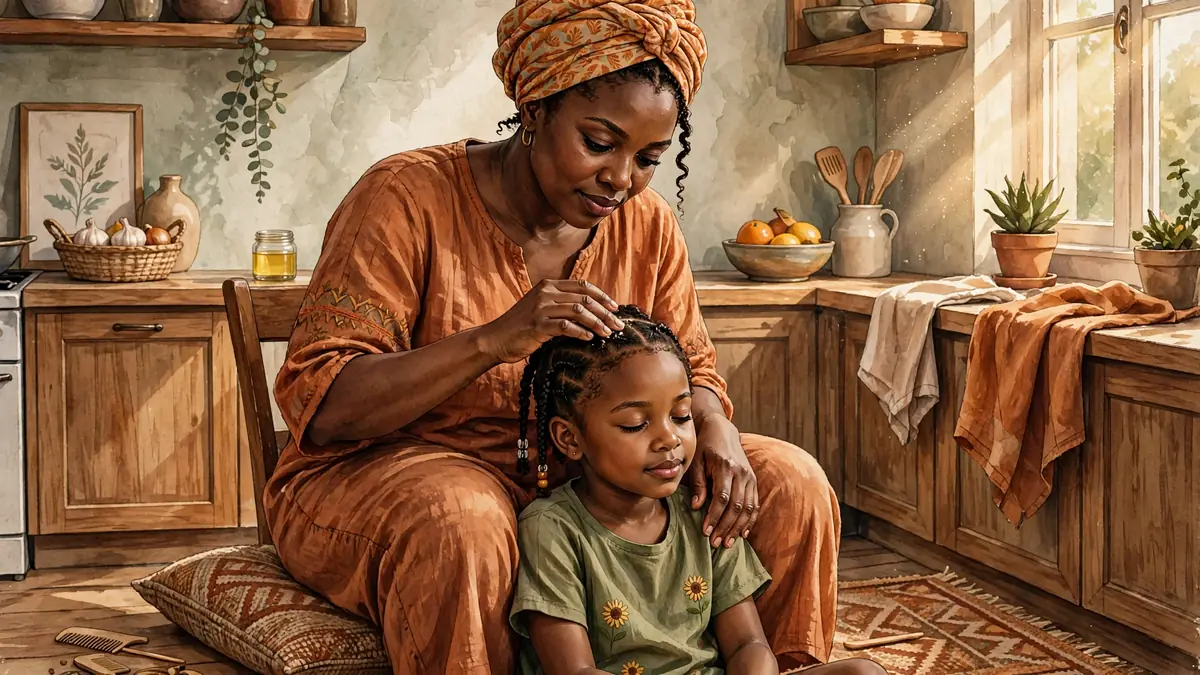
The revolution had elders. Esther Rolle’s Florida Evans wore her 4C TWA on Good Times weekly in the 1970s, before “natural hair” was a movement with a name. Tia and Tamera Mowry’s big curls on Sister, Sister were hair goals for a generation of thick-haired teens. These characters didn’t get think pieces; they just showed up as themselves, which in their era was the bravest choice of all.
Why it matters beyond the screen
TV didn’t change in a vacuum — it changed alongside a real fight. In 2019, New York City banned discrimination based on natural hair. In March 2022, the House of Representatives passed the CROWN Act — Creating a Respectful and Open World for Natural Hair — by 235 to 189, aiming to ban race-based hair discrimination nationwide. The pressure to alter natural hair was never imagined; it cost Black women jobs, schooling, and dignity.
And television finally gave the subject its own stage: The Hair Tales, the six-part docuseries that premiered on Hulu and OWN in October 2022. Created by Michaela Angela Davis and Tracee Ellis Ross, executive produced with Oprah Winfrey, it follows Ross in intimate conversations with Issa Rae, Marsai Martin, Representative Ayanna Pressley, CHIKA, Chloe Bailey, and Winfrey herself — telling the story of Black womanhood through hair. Wikipedia’s overview captures its scope: identity, culture, legacy, and joy.
Hair has always been political for Black women — Black feminist writing has said so for decades, and Zora Neale Hurston was already writing about the symbolism of a Black woman’s hair in Their Eyes Were Watching God back in 1937. As Flavorwire wrote when the Annalise moment aired, television was finally showing “a black woman removing all the elements white supremacy tells her she has to wear to be beautiful, successful, powerful.” Television is still catching up to what Black women always knew. These characters are how far it’s come.
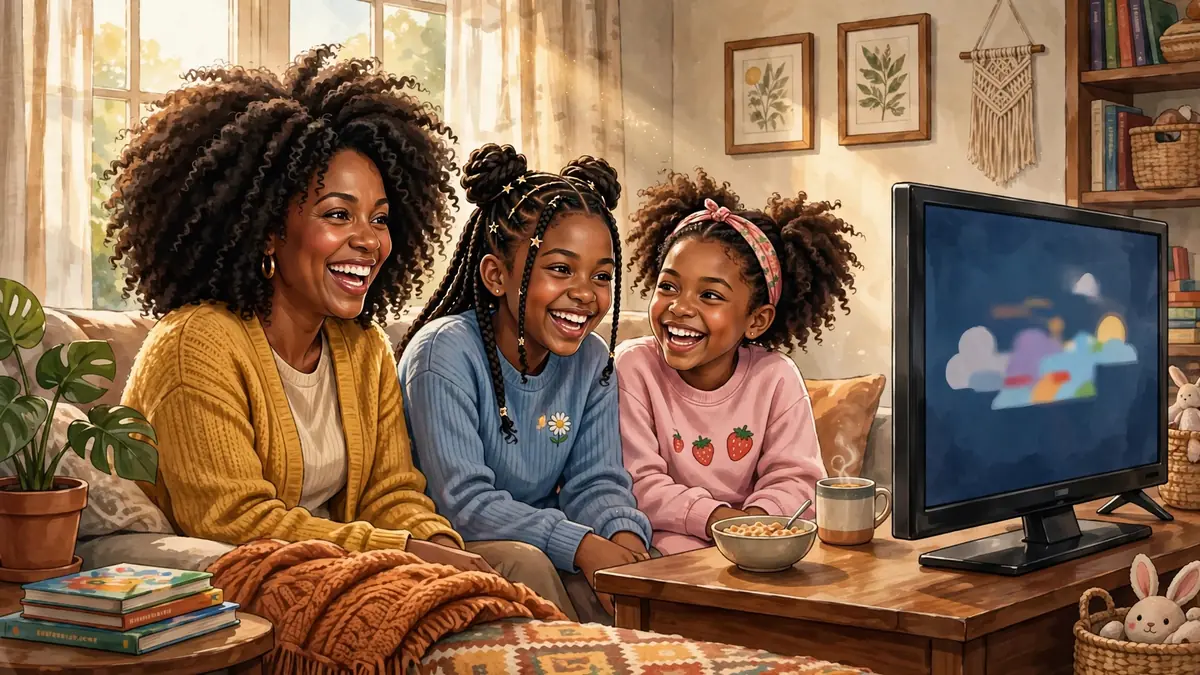
AI-generated illustration.
Where to watch next
Start with The Hair Tales on Hulu, then revisit the “Hair Day” episode of Black-ish and Annalise’s mirror scene. And for the literary side of the story, our guide to Black women writers starts with Hurston — whose heroine’s hair carried the whole meaning of the novel.